The problem: the CRM stores data, the RM carries the relationship
The hackathon brief was open: design an AI-integrated platform for a relationship manager at a financial advisory firm. We spoke to a colleague who had worked in that world. She explained that RMs play two roles: winning new clients, and keeping existing ones. We chose the second, because that is where the long-term relationship lives.
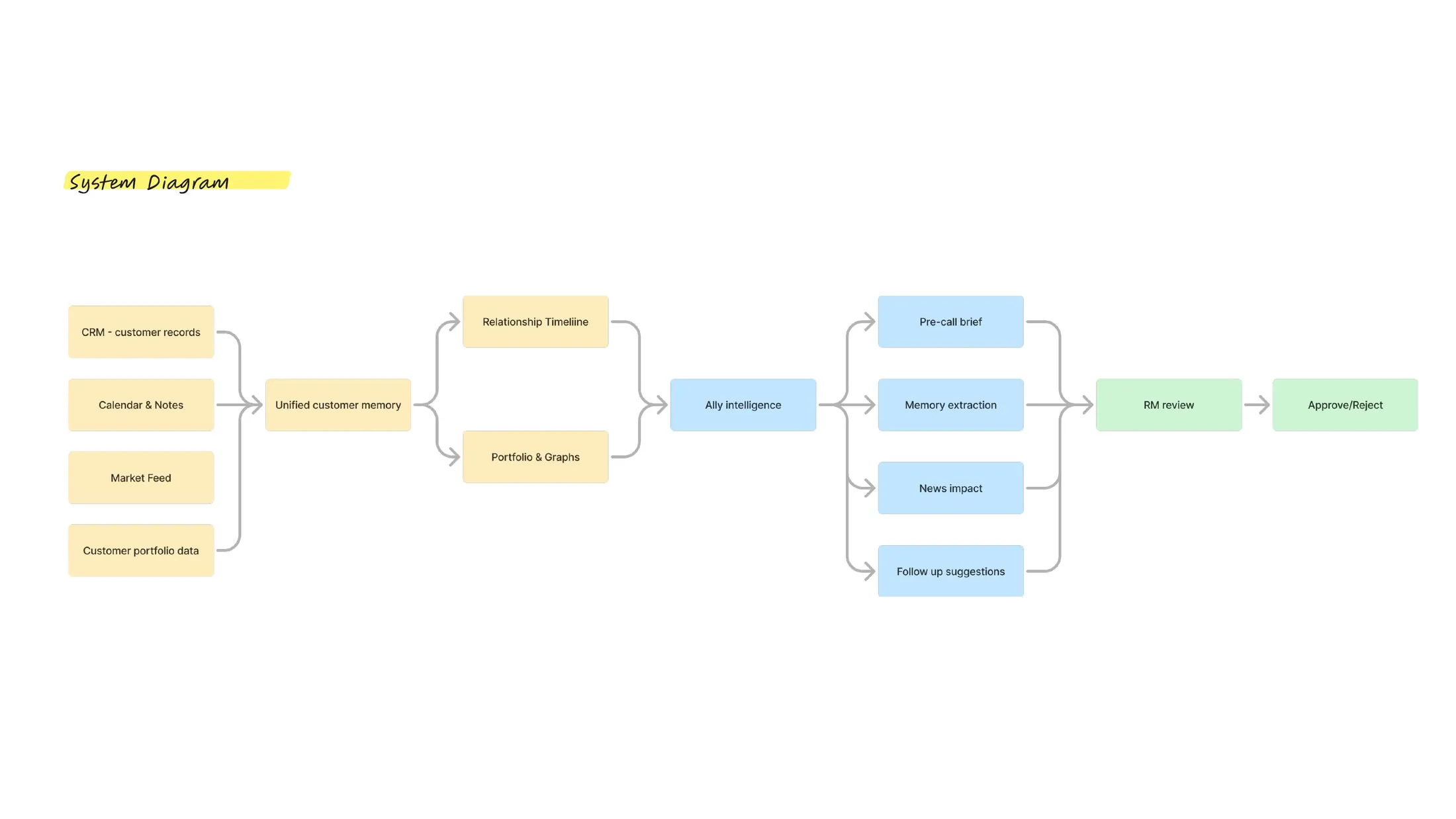
Before every meeting, an RM needs four things: what matters to this client now, what has changed, what they promised last time, and how to approach the conversation. That context is scattered across the CRM, spreadsheets, email and memory. Meetings can be two weeks apart, with a dozen other clients in between.
The cost isn't only preparation time. It's missed context, missed promises, and fragile handovers. When an RM leaves, the next one receives the data, but not the reasoning, the trust history or the nuance.
Decision 1Start from the client, not the spreadsheet
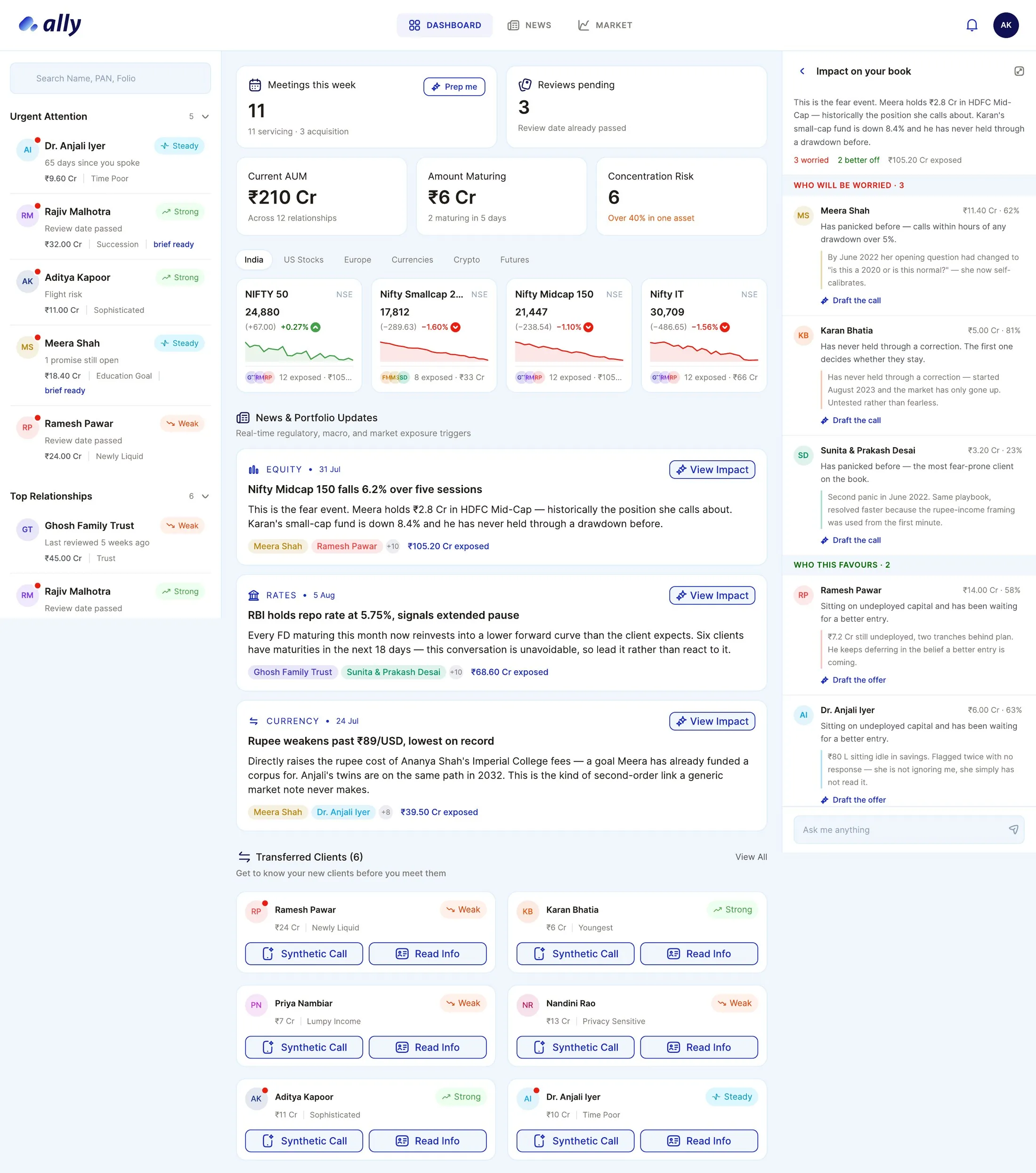
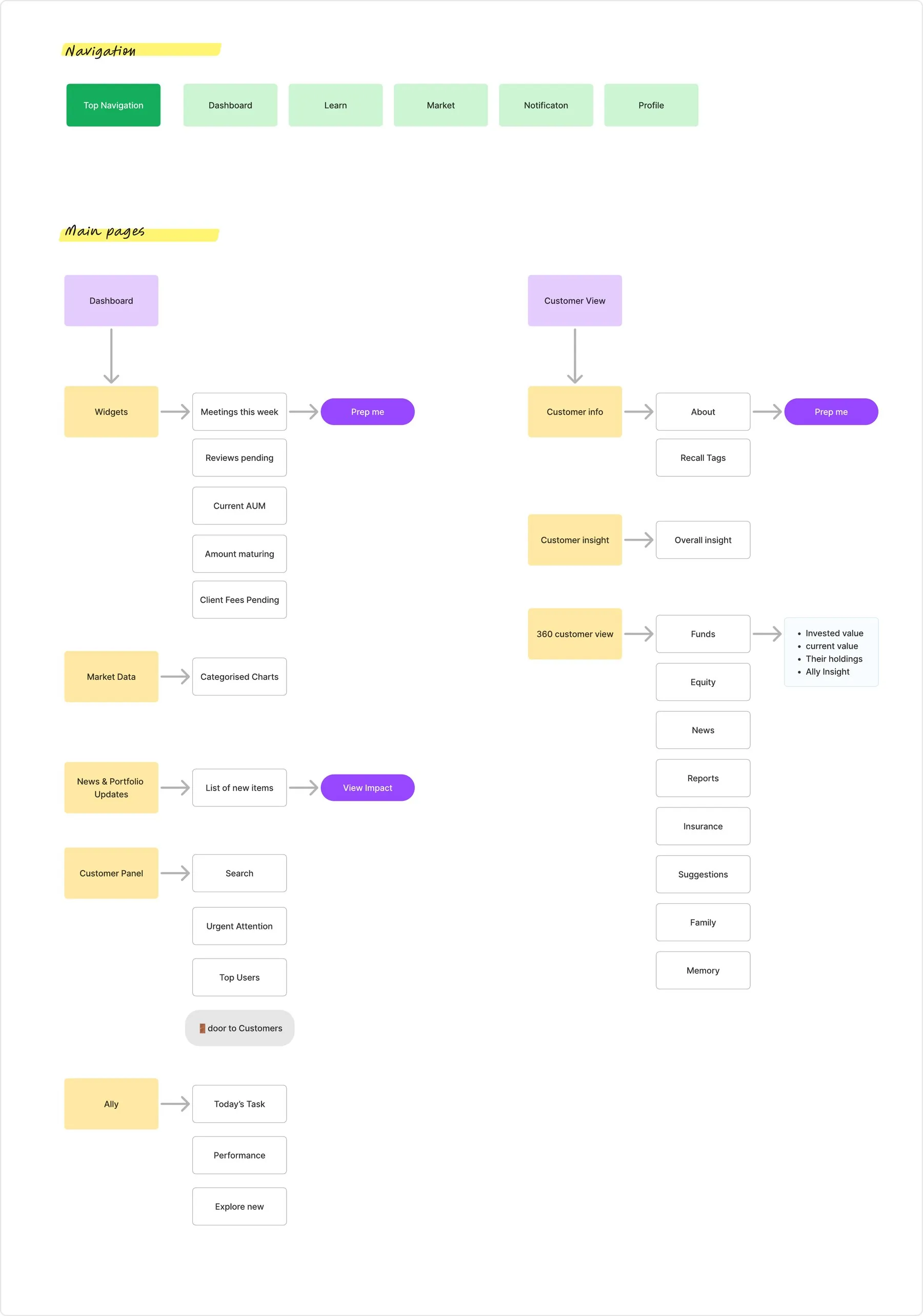
RMs didn't need another dashboard. They needed to walk into a conversation prepared. So the workspace follows the RM's day (what needs attention, who needs context, what happens next) rather than the firm's data silos.
| An "urgent attention" list with human cues | Each client shows a relationship status (Steady, Strong, Weak) and the reason it matters today: "65 days since you spoke", "Flight risk", "1 promise still open". |
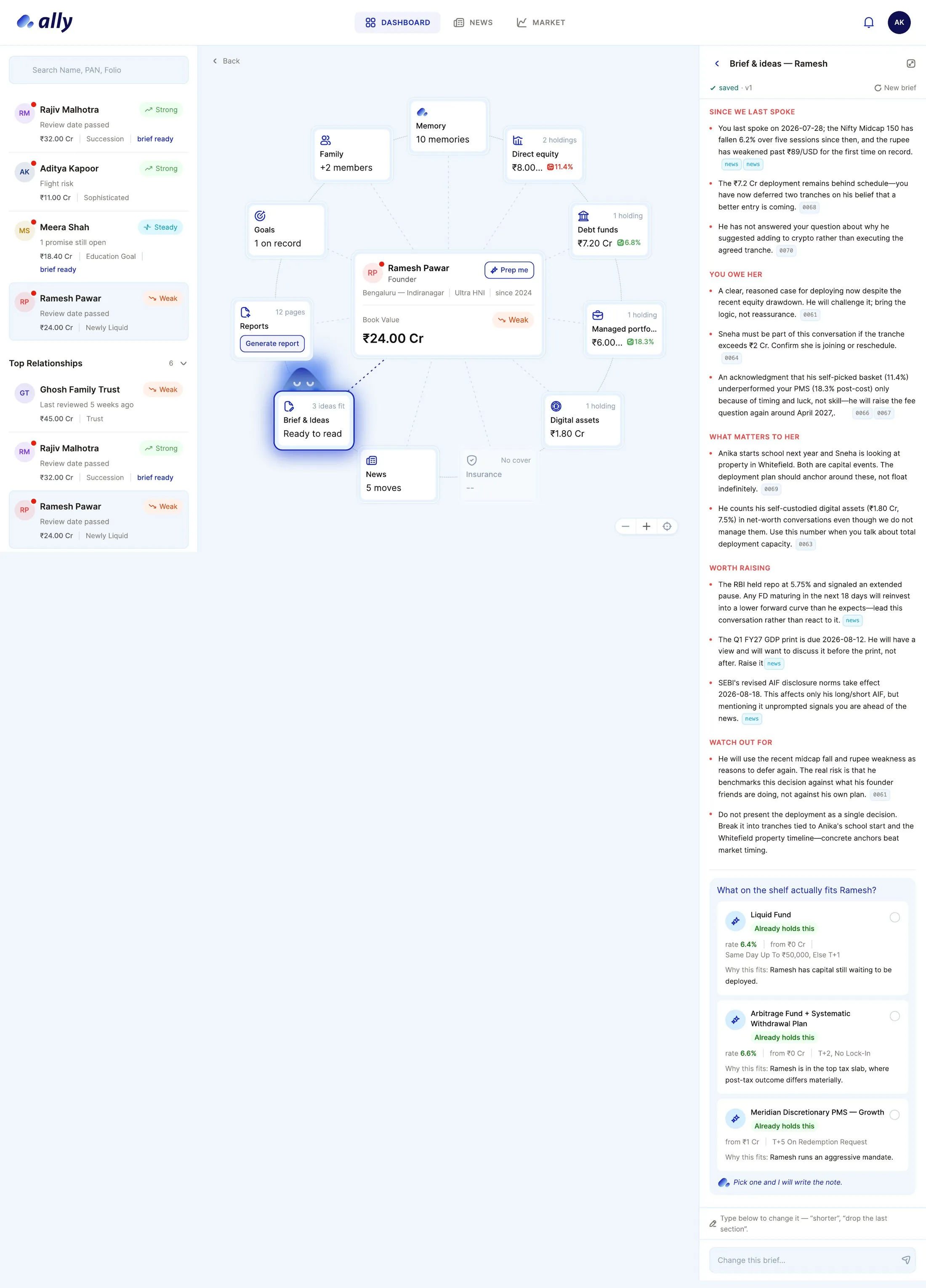
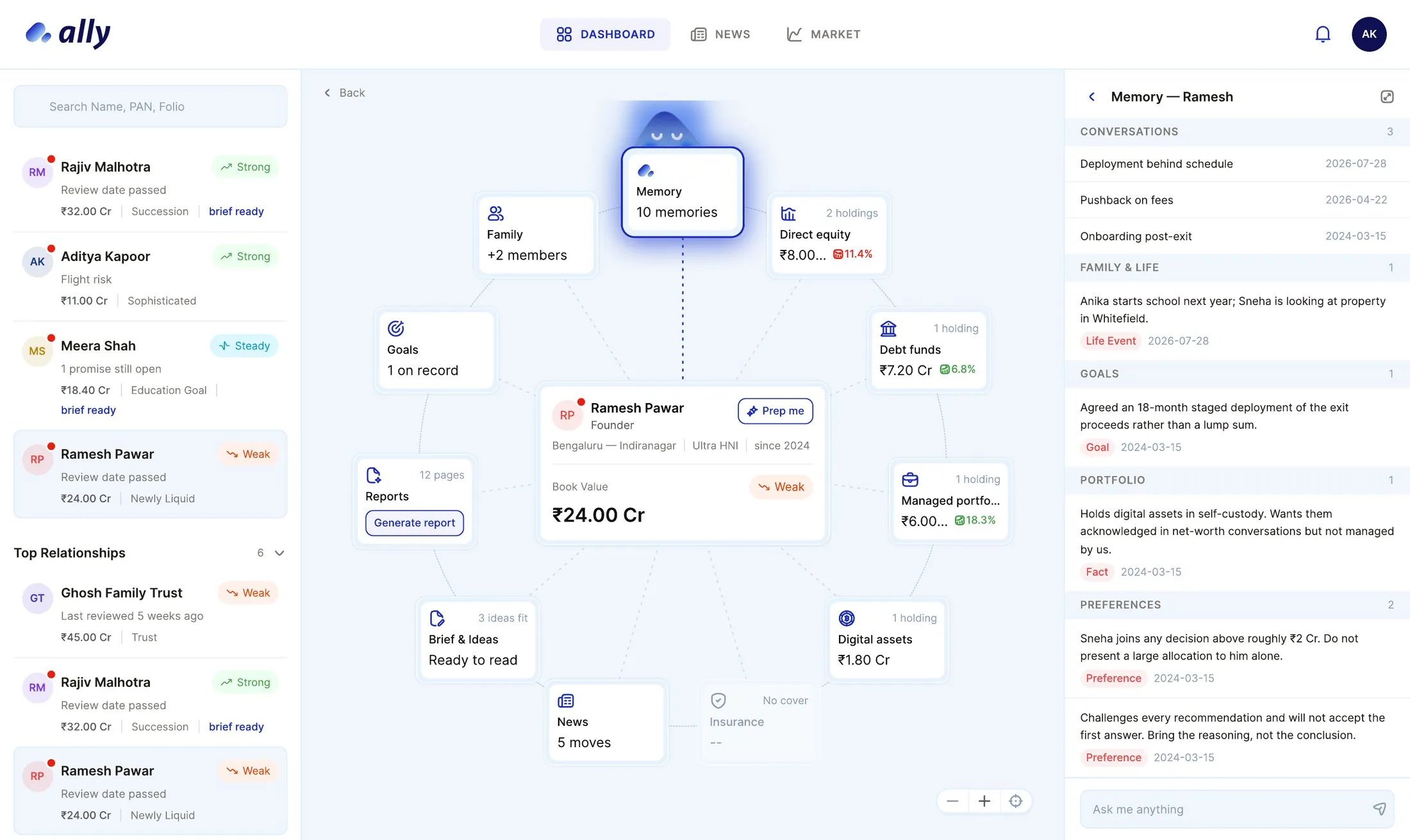
| A relationship map | The client sits at the centre, with everything around them: family, goals, memories, each type of holding, insurance, reports, ideas and news that affects them. Any node opens in a panel without leaving the map. |
| Talk to Ally | A side panel summarises the client and answers questions such as "Summarise my last meeting" or "How does today's market affect this client?". The summary includes how the client likes to be reached: "WhatsApp after 20:30. Avoid calling during the day, she's in theatre." That one line is the difference between a CRM and a relationship. |
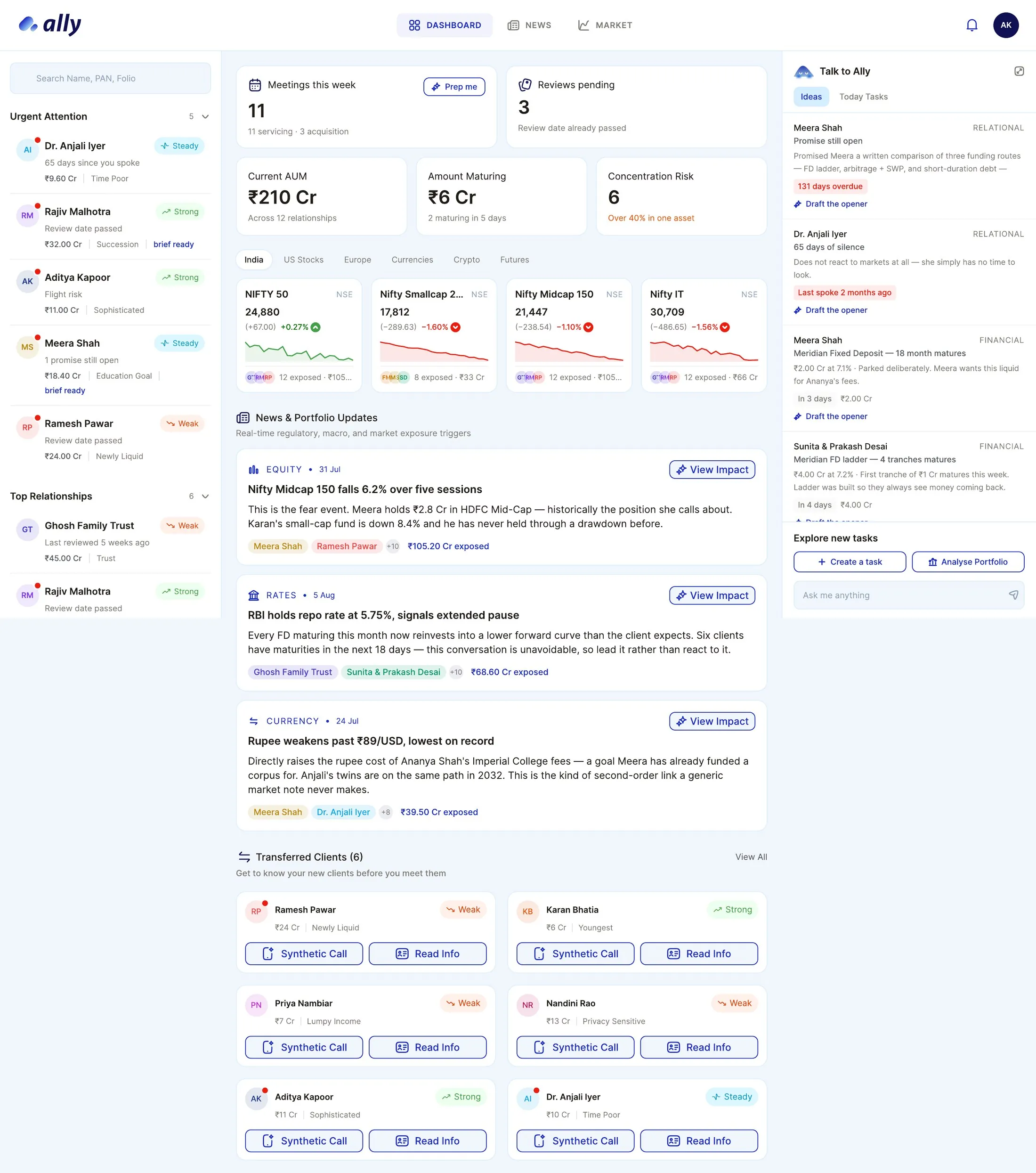
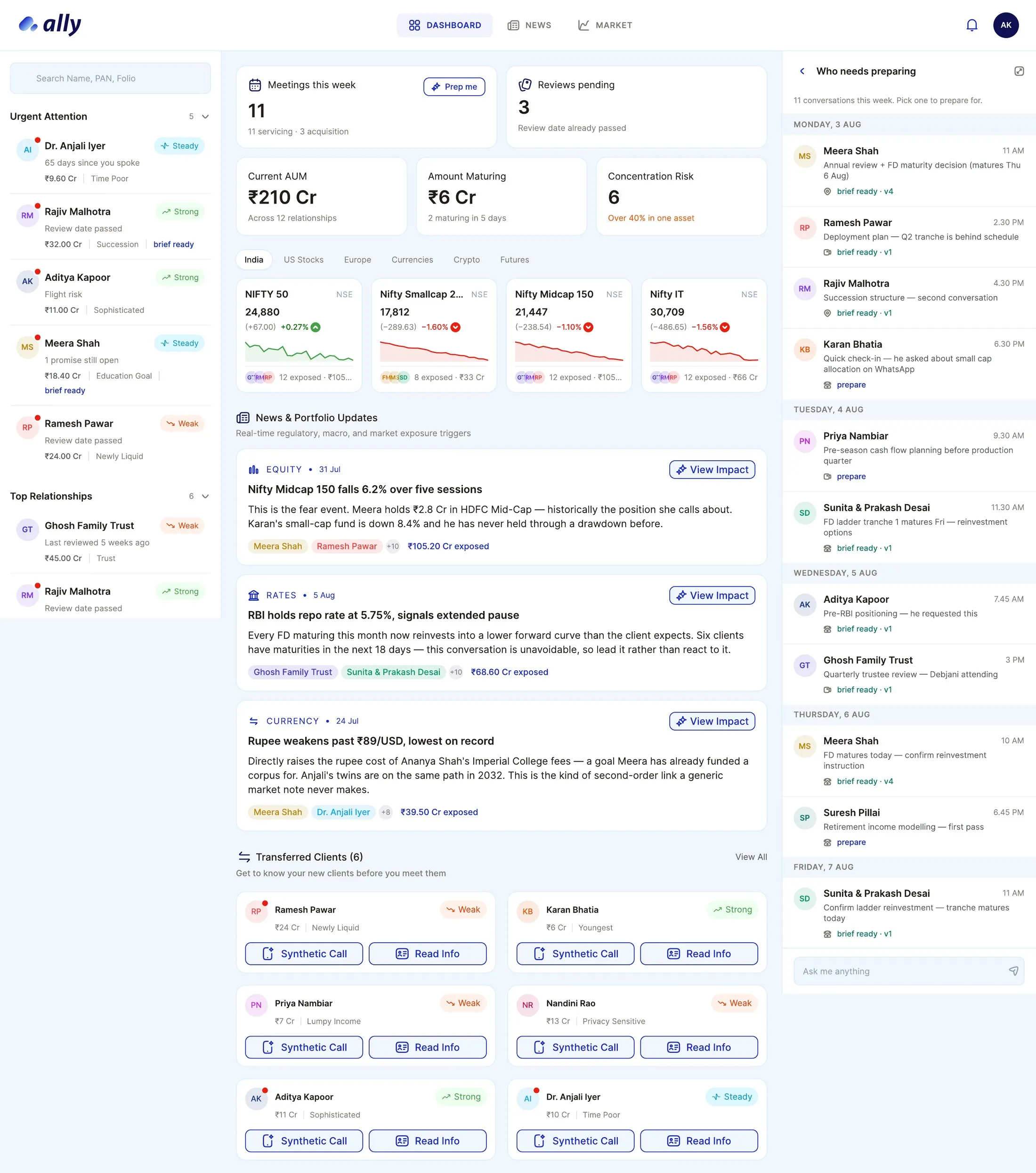
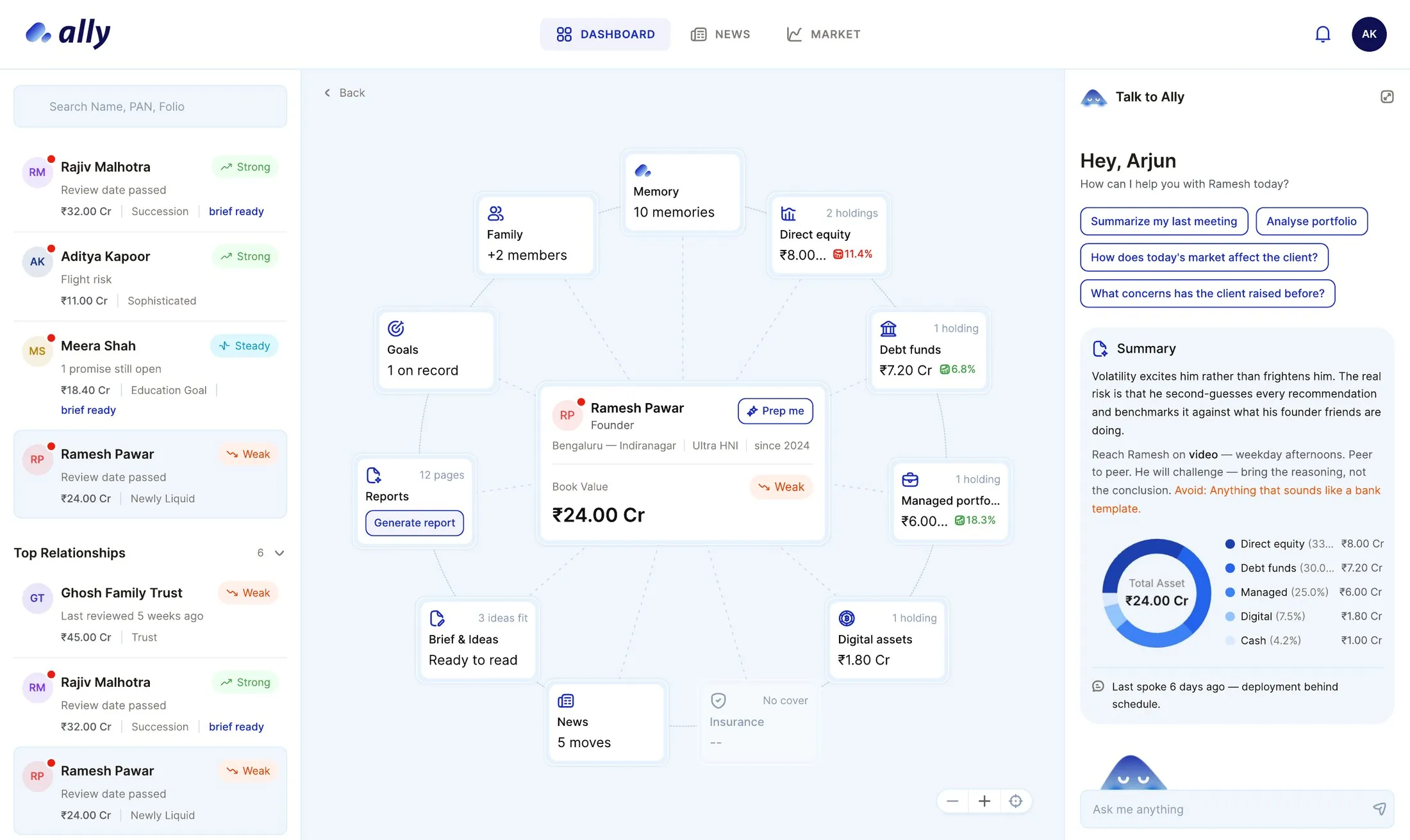
All client names and figures in the prototype are fictional.
Decision 2Capture memory, but let the RM approve it
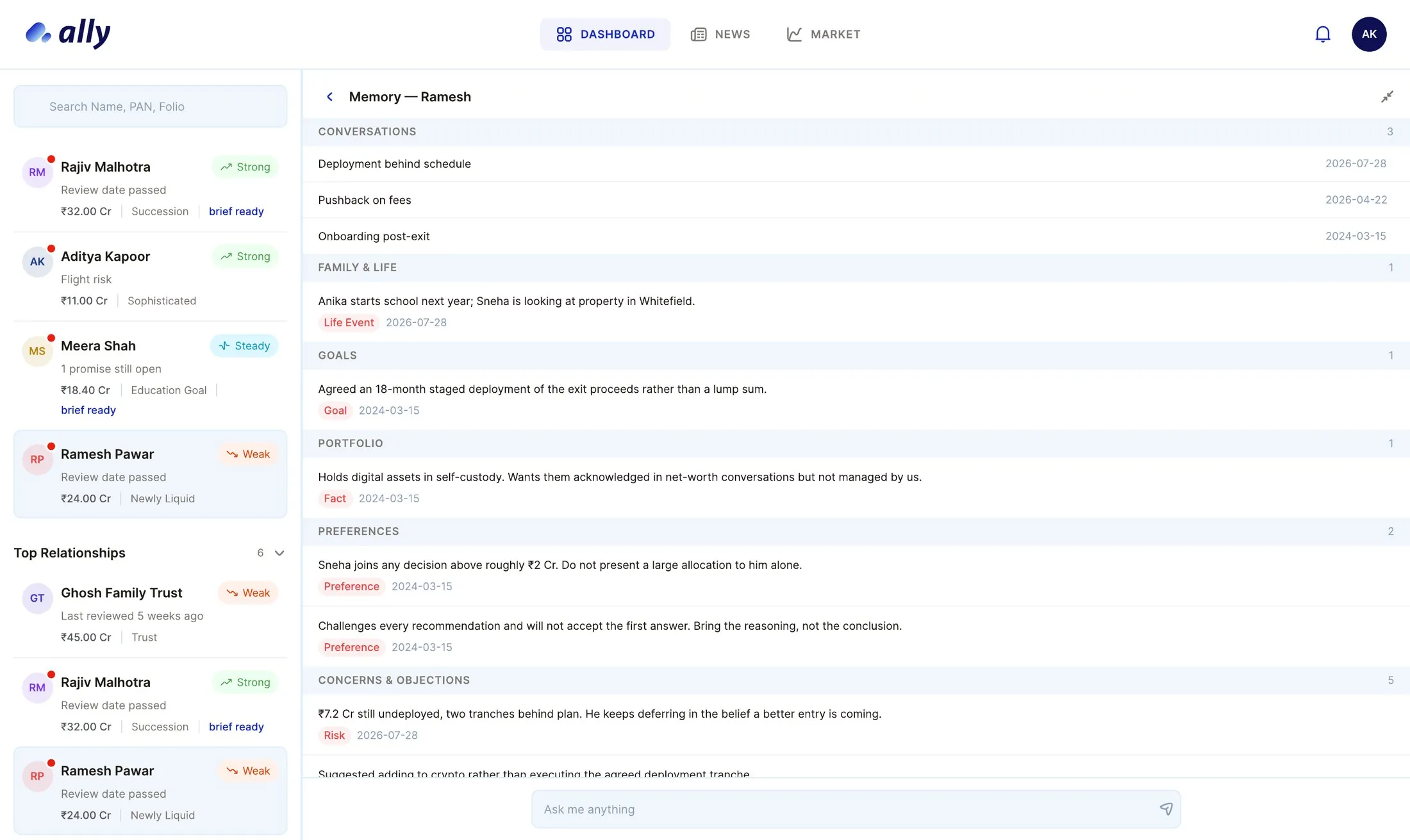
Most RM meetings happen in person, and notes get written later, if at all. During a call, the RM taps once to mark a moment (a new fact, a promise, a change in mood) without typing or looking away. Afterwards, Ally shows a memory diff: each item marked as heard, inferred or promised, for the RM to edit, confirm or reject. Nothing becomes part of the client record without review.
As the concept grew, we went a step further: recording and transcribing in-person meetings, the way online meetings already are, so the RM never has to take notes. It only works with the client's consent, and the same review step still applies.
Decision 3Explain why, then hand over to action
Ally doesn't just raise an alert; it shows its reasoning. For example: "₹18 Cr from an exit has sat in a liquid fund for 47 days. The client has said twice that he doesn't want to sit in cash." A memory trail shows where that came from, with dates. The RM then turns it into a task with an owner, a reason and a due date.
The result isn't an AI recommendation. It's a better-prepared RM with a clear next move. Every suggestion shows its source and confidence, and stays editable.
Decision 4Rehearse the handover before meeting the client
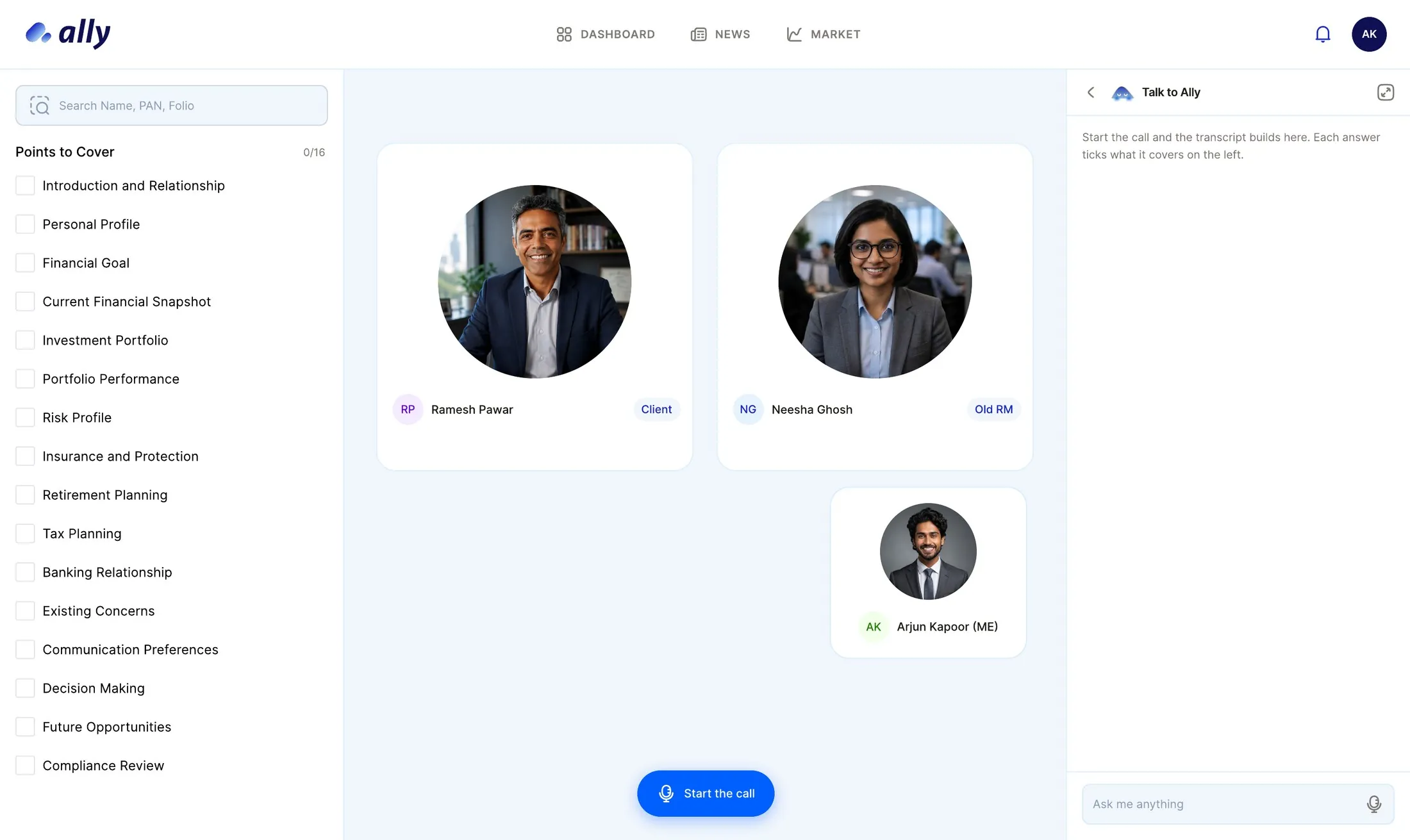
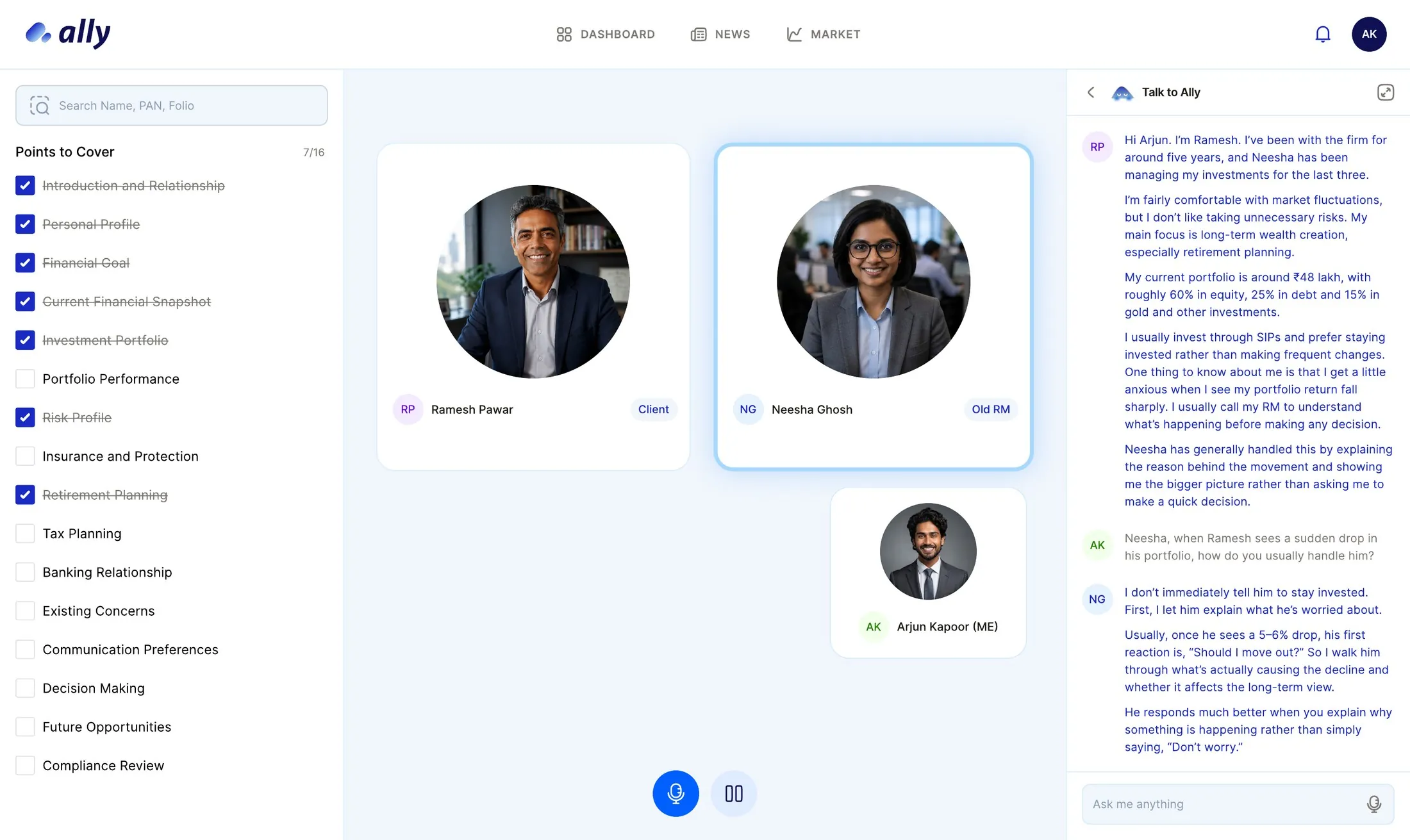
This is the idea I'm proudest of. When a client moves to a new RM, the new RM can hold a practice meeting with AI versions of the client and the previous RM, built from everything Ally has remembered. It's set up like a video call. The new RM asks questions out loud, the synthetic client answers in their own voice ("I'm comfortable with market fluctuations, but I don't like unnecessary risks"), and a checklist of 16 topics, from goals and risk profile to communication preferences and compliance, tracks what has been covered.
Reading notes tells a new RM what happened. A conversation tells them how the client thinks. The aim is to protect the client's trust, so the new RM doesn't repeat the previous one's mistakes.
How we built it in two days
We kept the prototype deliberately narrow: prove one complete loop (prepare, capture, follow through) for one RM and one client story, then add to it.
Fifteen people worked in parallel. While designers built the screens, the developer set up a quick backend to fill the demo with realistic client data. Marketing named the product, the visual designers created the mascot, and the motion designer and marketing wrote and produced the demo video. My job was to hold the concept together, so every workstream was building the same product, and to design key screens myself.
Outcome
Ally won SprintLY 2026, Lemon Yellow's first hackathon, against two other teams. Lemon Yellow now uses it to show clients how we build AI into a product, as a working demo rather than a slide.