Case study · 2022–25 · Tata Motors

FleetVerse

Selling trucks to people who buy what their peers buy

FleetVerse is Tata Motors' digital marketplace for commercial vehicles. Over three years I helped design it, from a website redesign to a nine-language app.

Client

Tata Motors Commercial Vehicles, via Lemon Yellow LLP

Timeline

2022–25, in phases

Scope

Website, CV configurator, Smart Search, customer app (web, Android, iOS)

Team

4 designers; the client's digital sales, marketing and product leads; an IT and backend partner

My role

Senior-most of four designers on the website; project lead for the app

Research

162 owner interviews in two rounds, plus 20 of the client's staff; 10,513 km

Industry

Automotive · Commercial vehicles · E-commerce

Product areas

Vehicle finance (EMI, loan application, e-KYC) · Product configurator · Guided search · Multilingual & voice

My role & responsibilities
UX research
Field interviews across India, competitor analysis
UX design
Website, configurator, guided search, app
Leadership
Project lead for the app; main contact for the client and the IT partner
TL;DR

For recruiters deciding whether to read on.

1.2MPlatform users
75K+Enquiries on the platform
+30%Conversions vs pre-launch
50K+App downloads (Google Play)
4.7App rating · 169 reviews

Platform figures reported by the client after the website went live (2023). App figures from Google Play, September 2026. Design is one of many things behind these numbers. The product's use by the client's own sales executives also led to a dedicated dealer platform.

What I learned
  1. Buyers think in businesses, not model names. Owners buy what their peers drive, so the platform had to stand in for that peer network. That's why it has two ways in: build a vehicle, or describe your business.Read more ↓
  2. Watch, don't just ask. No owner mentioned the configurator problems. We only saw people miss tap targets and wait on stalled animations because we were watching them use it.Read more ↓
  3. Research operations are part of research. Round 1 recordings were lost to traffic noise. In Round 2 we recorded, spot-checked and debriefed every night.Read more ↓
  4. Design isn't done at handoff. The website build drifted from the design. For the app, we tested real builds on the live backend before every release.Read more ↓
  5. Build the design system for the next product. Ours was made for the website and didn't stretch cleanly to the app.Read more ↓
How I evolved
  • Thinking → From screens to the business behind them. When compliance blocked mileage, we showed money instead, because for these buyers uptime is income.Read more ↓
  • Process → From asking to observing, and from reviewing screens to testing what actually ships.Read more ↓
  • Leadership → From owning journeys as the senior designer on a four-person team, to running the project as the main contact for the client and the IT partner, then taking on the dealer platform.Read more ↓
03

The problem

The client sells commercial vehicles through dealers, and through relationships its sales executives build. Those relationships run deep: a buyer may even switch brands to follow an executive who moves and can offer a better deal. The brief was to redesign the online sales platform so buyers could explore, configure, finance and book a vehicle online, and so the business could generate and convert more leads.

These buyers aren't typical online shoppers. They range from fleet owners running dozens of heavy trucks to drivers buying their first vehicle for last-mile delivery. For all of them, a vehicle is a business asset: every day it sits in a garage is a day of lost income.

ConstraintWhat it meant
Legacy backendChanges to core features, including search, were slow or impossible
Messy product dataThousands of variant combinations across heavy vehicles
ComplianceNo mileage, the number buyers ask about most
Low bandwidthWhere many users live and work
Strict brand guidelinesA first product from a very established brand
04

Chapter 1 · The website

2022–23 · UX Designer, the senior-most of four designers

I owned journey decisions, presented walkthroughs to the client and interviewed owners in the field.

Research: buyers copy their peers

We met 58 commercial-vehicle owners in person, at their shops and depots in Mumbai and Pune, in Marathi and Hindi. We also ran a competitor analysis and looked at products outside automotive where you build something before you buy it.

One pattern ran through the interviews:

Owners buy what others in their business buy.

A water-can distributor buys what other water-can distributors drive. That isn't habit. A proven model fits the job (narrow lanes, the right load, fuel economy) and, above all, it keeps running, because spare parts and mechanics are everywhere. Uptime is income.

Experienced owners have that peer network. A first-time buyer doesn't. The platform had to stand in for it.
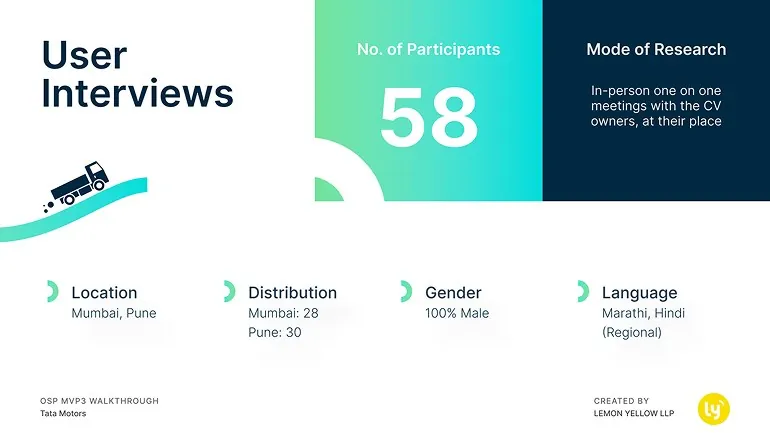
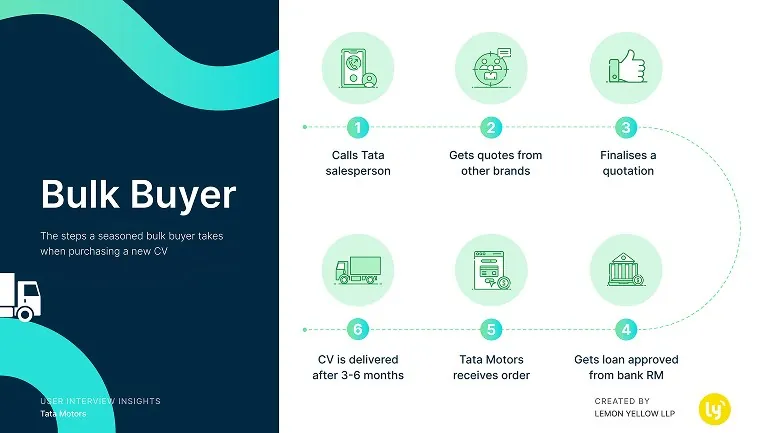
Round 1 research · 58 owners
01 / 08
Round 1 research: 58 in-person interviews in Mumbai and Pune, in Marathi and Hindi
0158 in-person interviews in Mumbai and Pune, in Marathi and Hindi
Round 1 research: How a seasoned bulk buyer buys: calls, quotes, loan, delivery
02How a seasoned bulk buyer buys: calls, quotes, loan, delivery
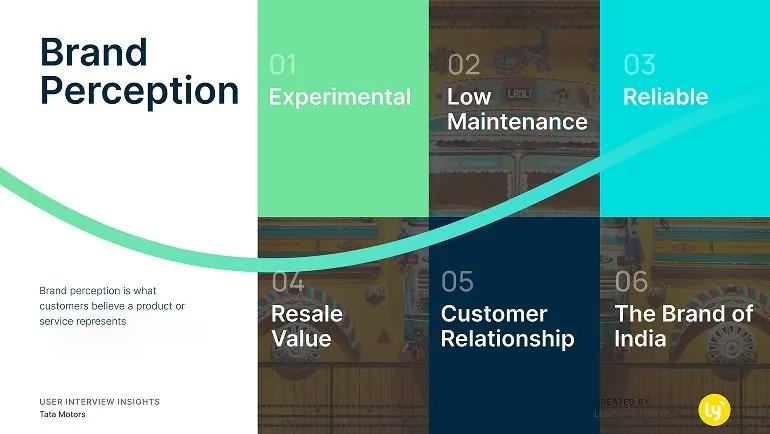
Round 1 research: Why owners choose the brand: reliability, resale value, low maintenance
03Why owners choose the brand: reliability, resale value, low maintenance
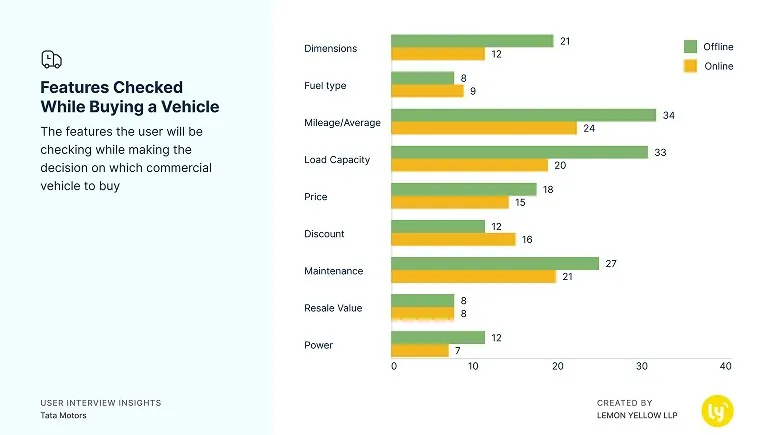
Round 1 research: What buyers check before buying, offline vs online
04What buyers check before buying, offline vs online
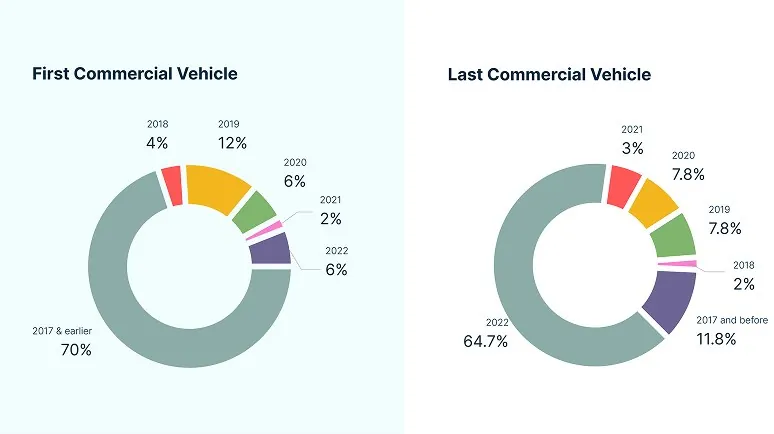
Round 1 research: When owners bought their first and their latest vehicle
05When owners bought their first and their latest vehicle
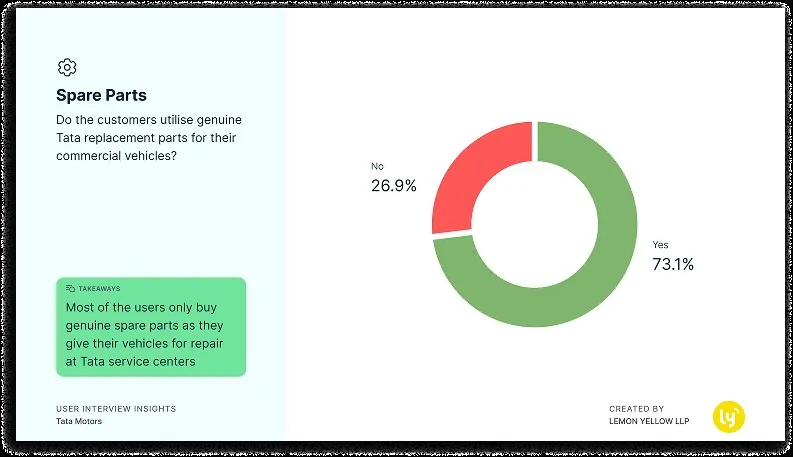
Round 1 research: 73% use genuine spare parts, serviced at authorised centres
0673% use genuine spare parts, serviced at authorised centres
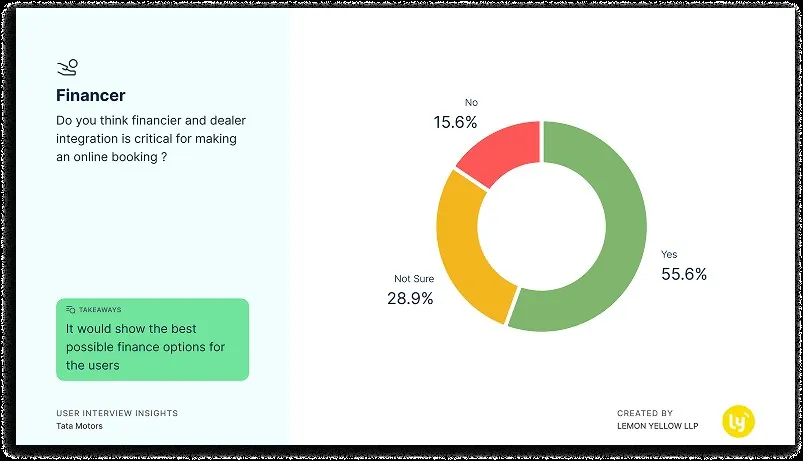
Round 1 research: 56% want the financer and dealer connected for online booking
0756% want the financer and dealer connected for online booking
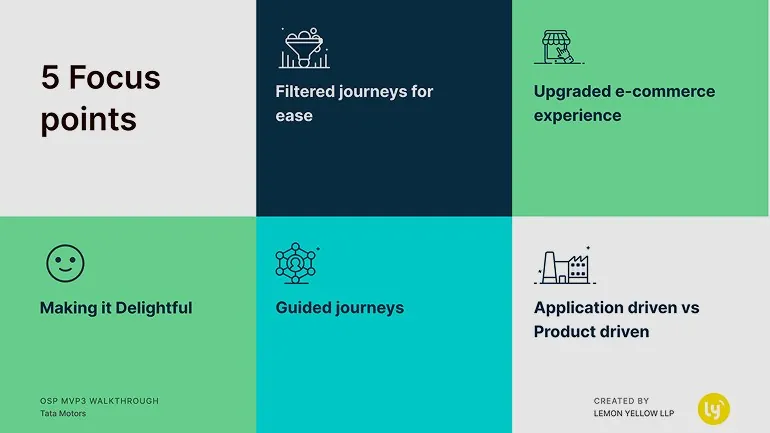
Round 1 research: Five focus points that shaped the design
08Five focus points that shaped the design

Decision 1Two ways in, for two kinds of buyer

Our first attempt was an insurance-style mini-search: a few quick questions and a result. It got little traction. A commercial-vehicle purchase is too big a decision for three questions. So we split the platform by who is buying:

The CV Configuratoris for experienced owners who know what they want. They build a vehicle over 11 steps: fuel type, operation, weight class, application, cabin and axle configuration. The client supplied the step logic and vocabulary; we designed the experience.
Smart Searchis for newcomers. They describe their business ("water cans, 80 km a day") and get a first result in two or three steps, then narrow down by removing what doesn't fit.

Smart Search was our team's proposal. It also solved a technical problem: the legacy backend couldn't support search changes on the main site, so we designed it as its own module.
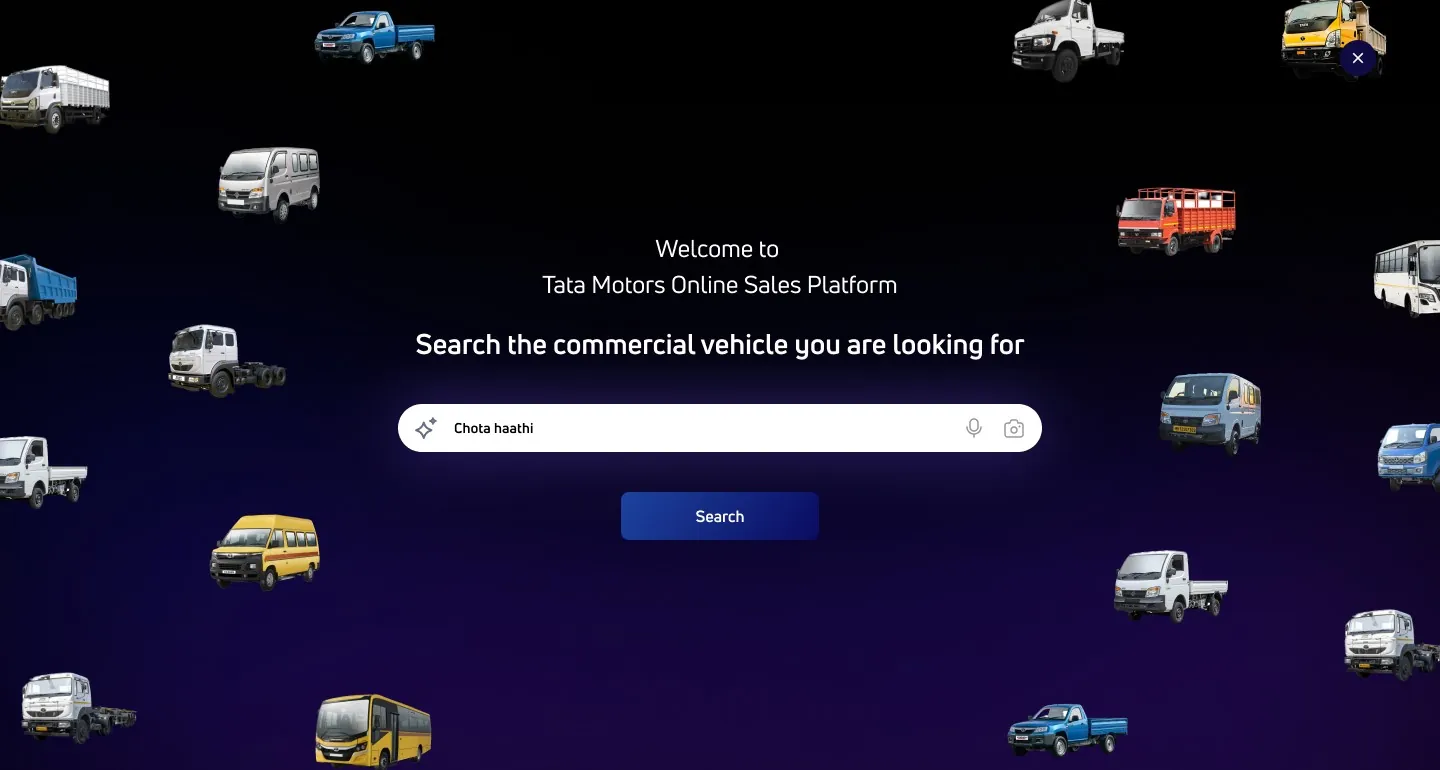
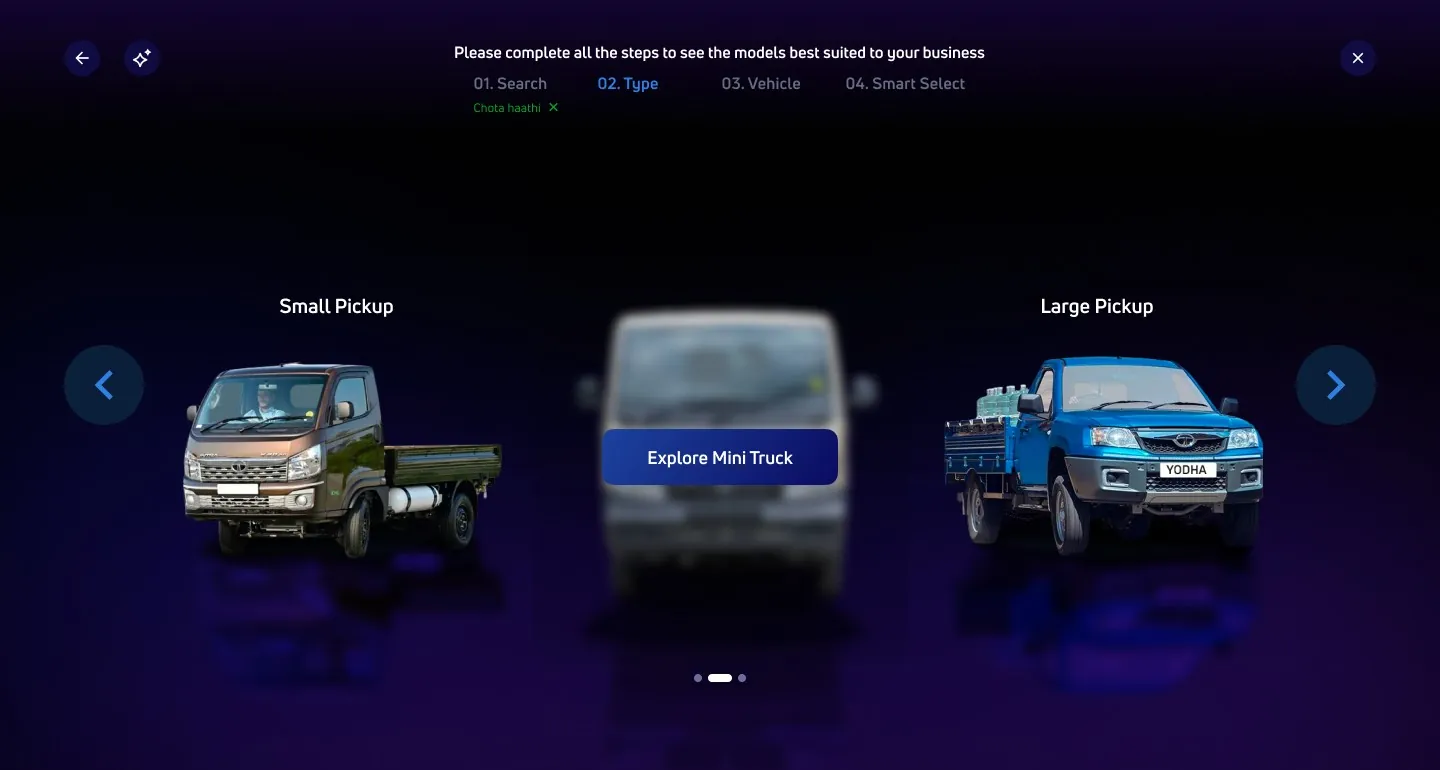
Smart Search, end to end · 6 steps
01 / 06
Smart Search:
01"Chota haathi", the everyday name for a small truck, is understood as a search
Smart Search: Step 2 narrows by body type, with the matching type in the centre
02Step 2 narrows by body type, with the matching type in the centre
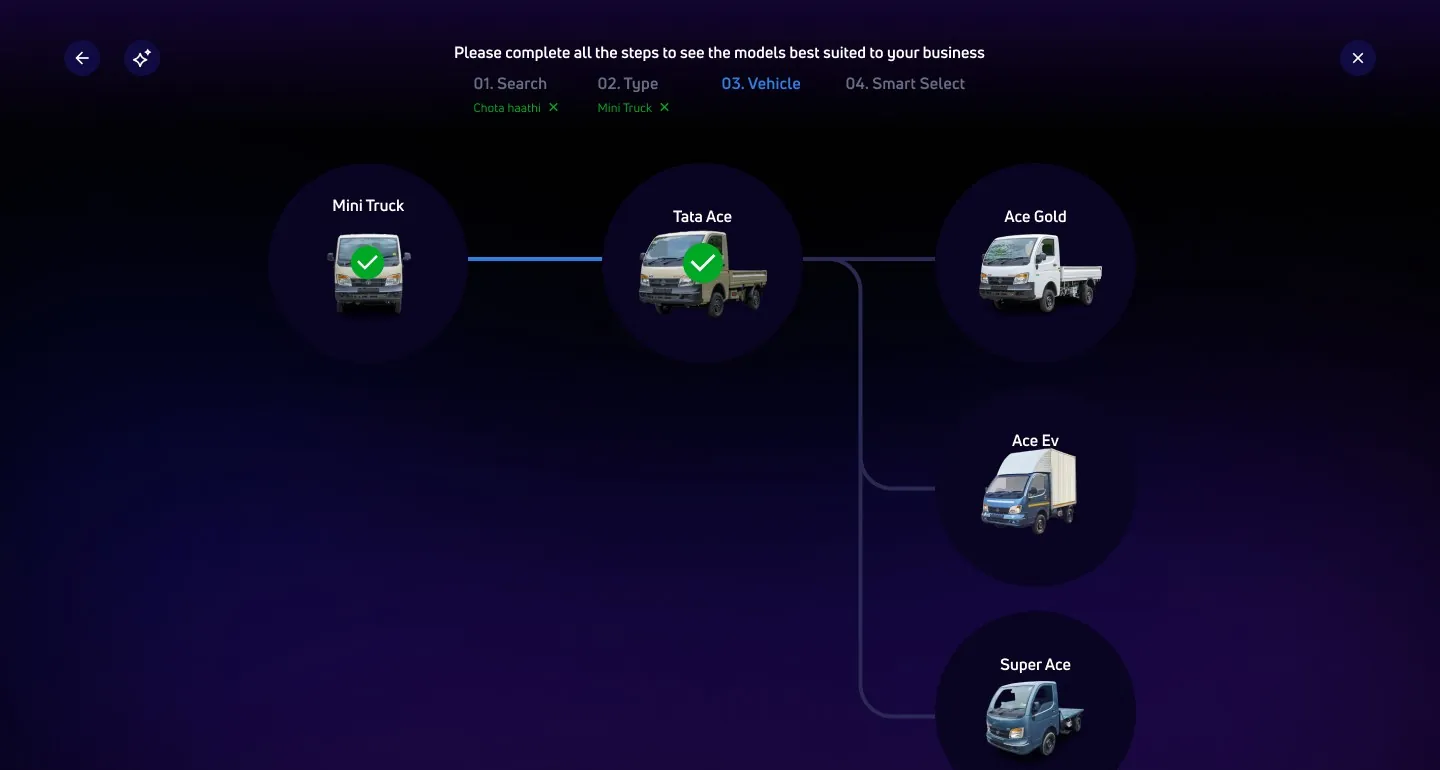
Smart Search: Step 3 shows the path taken so far and the models that branch from it
03Step 3 shows the path taken so far and the models that branch from it
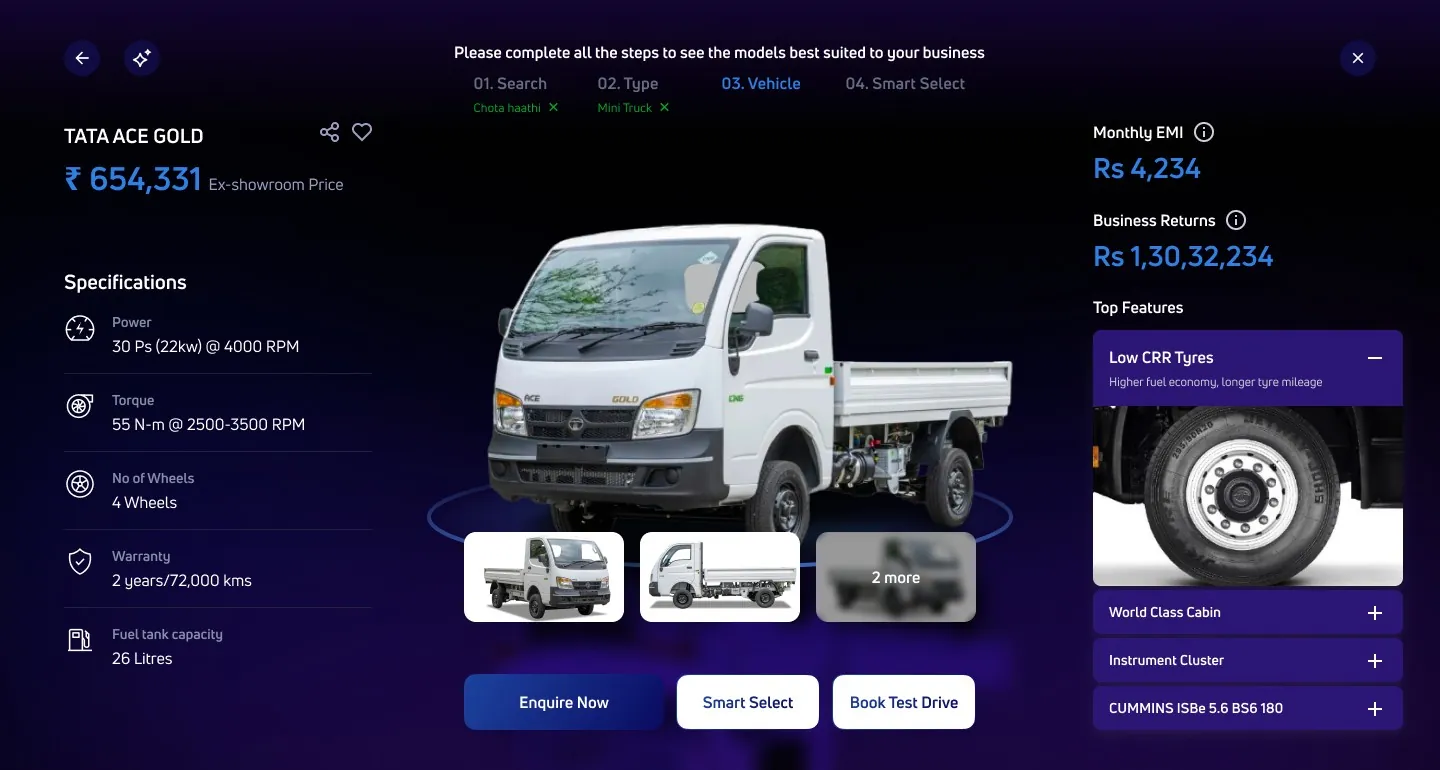
Smart Search: Each model leads with price, monthly EMI and business returns, not mileage
04Each model leads with price, monthly EMI and business returns, not mileage
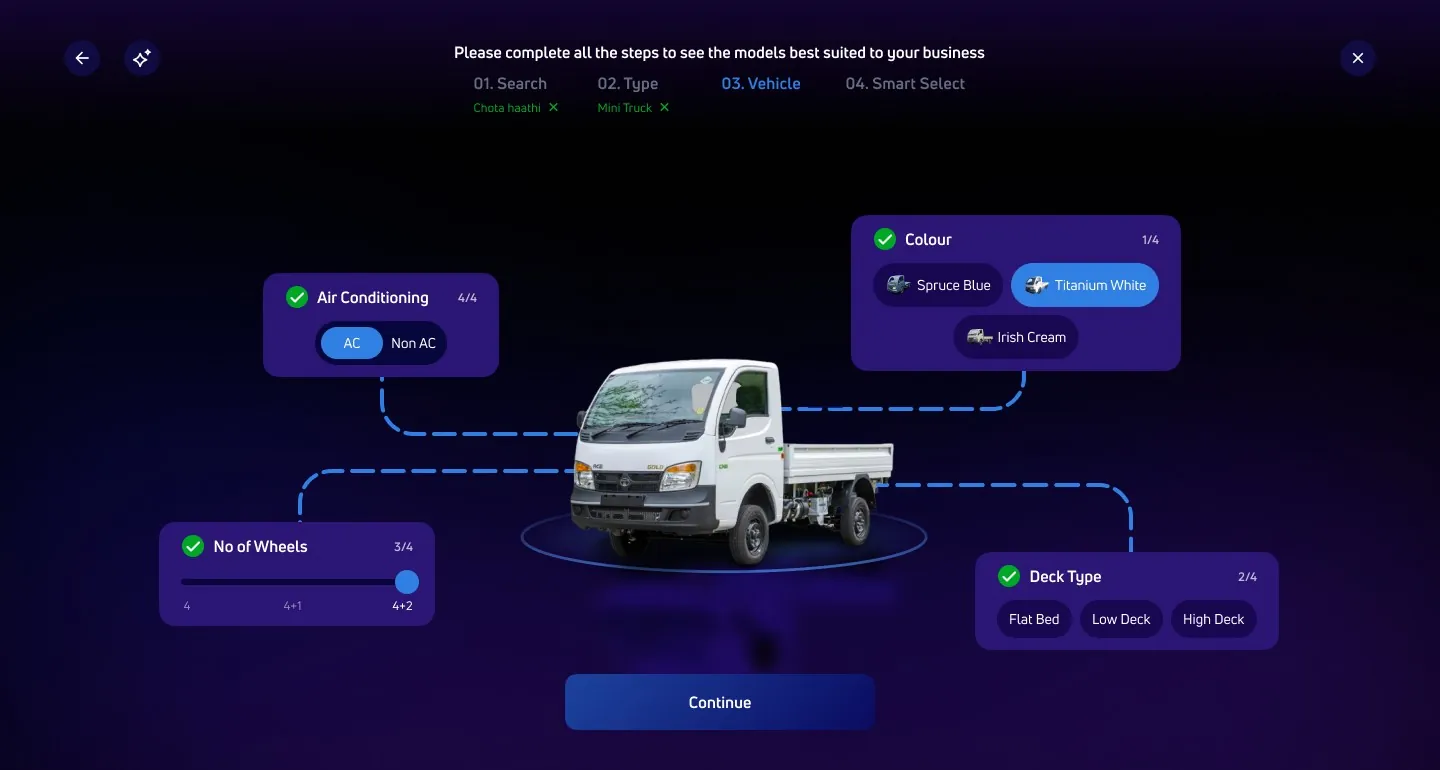
Smart Search: Smart Select: only the options that change the decision, set around the vehicle
05Smart Select: only the options that change the decision, set around the vehicle
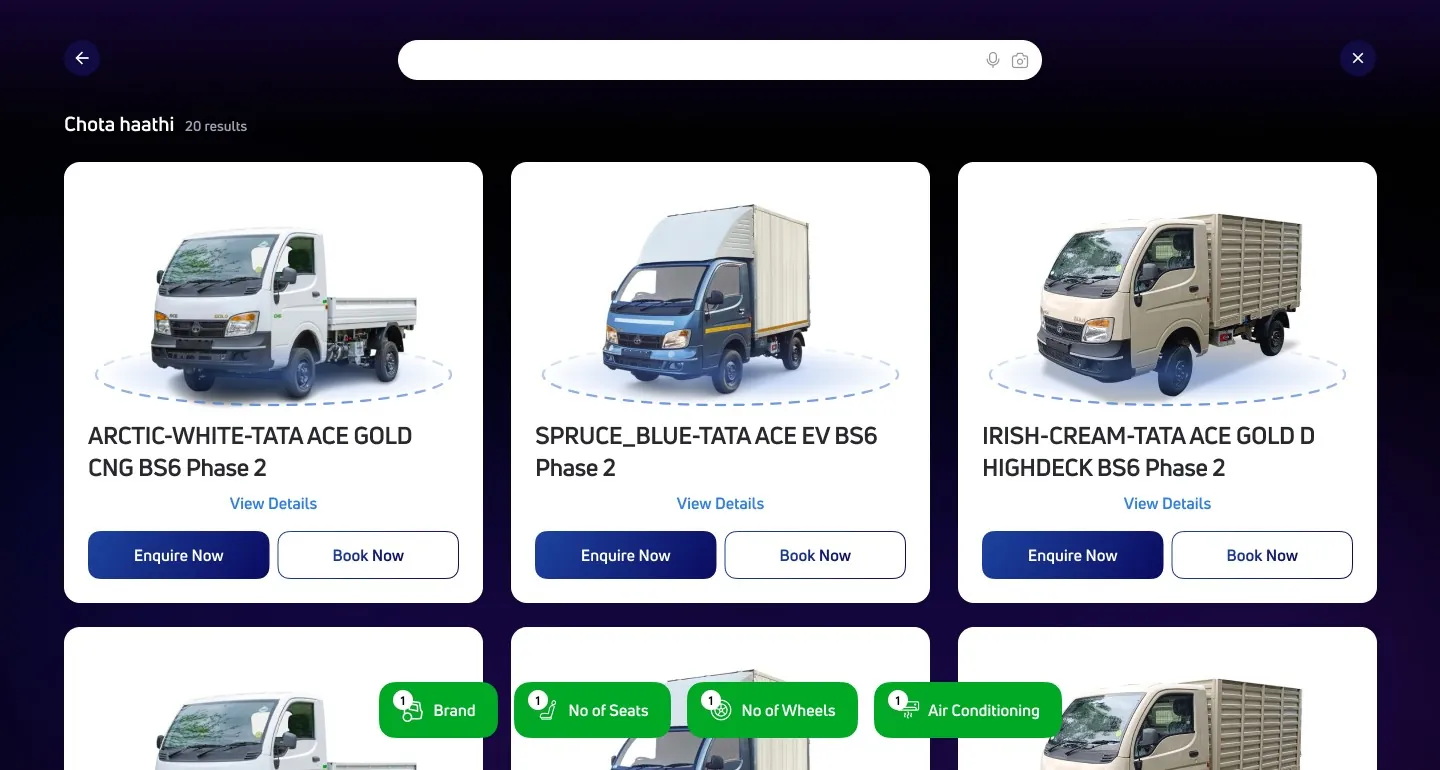
Smart Search: Results list the matching models, with the choices made shown as chips
06Results list the matching models, with the choices made shown as chips

The CV Configurator sits behind a login, so it isn't shown here. Walkthrough in interview

Decision 2Money instead of mileage

Compliance ruled out the mileage figure, the first thing every buyer asks about. Instead of leaving a gap, we reframed the decision in the terms buyers already use: money.

The Smart Search result shows Monthly EMI and projected Business Returns next to the vehicle, calculated with the client's logic. Where there's no returns data for a model, key specs take its place. The idea came from our team; the formula came from the client. We designed the result as a single view, so on desktop the whole decision fits on one screen.
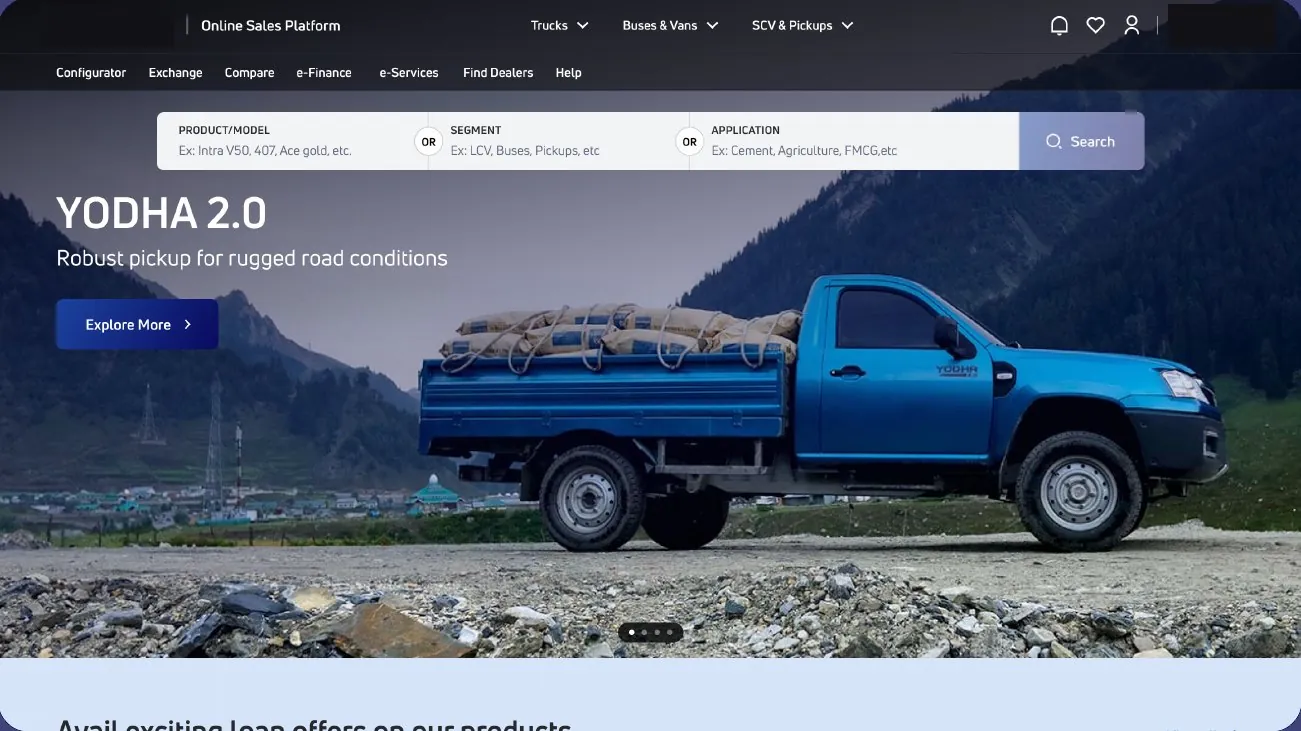
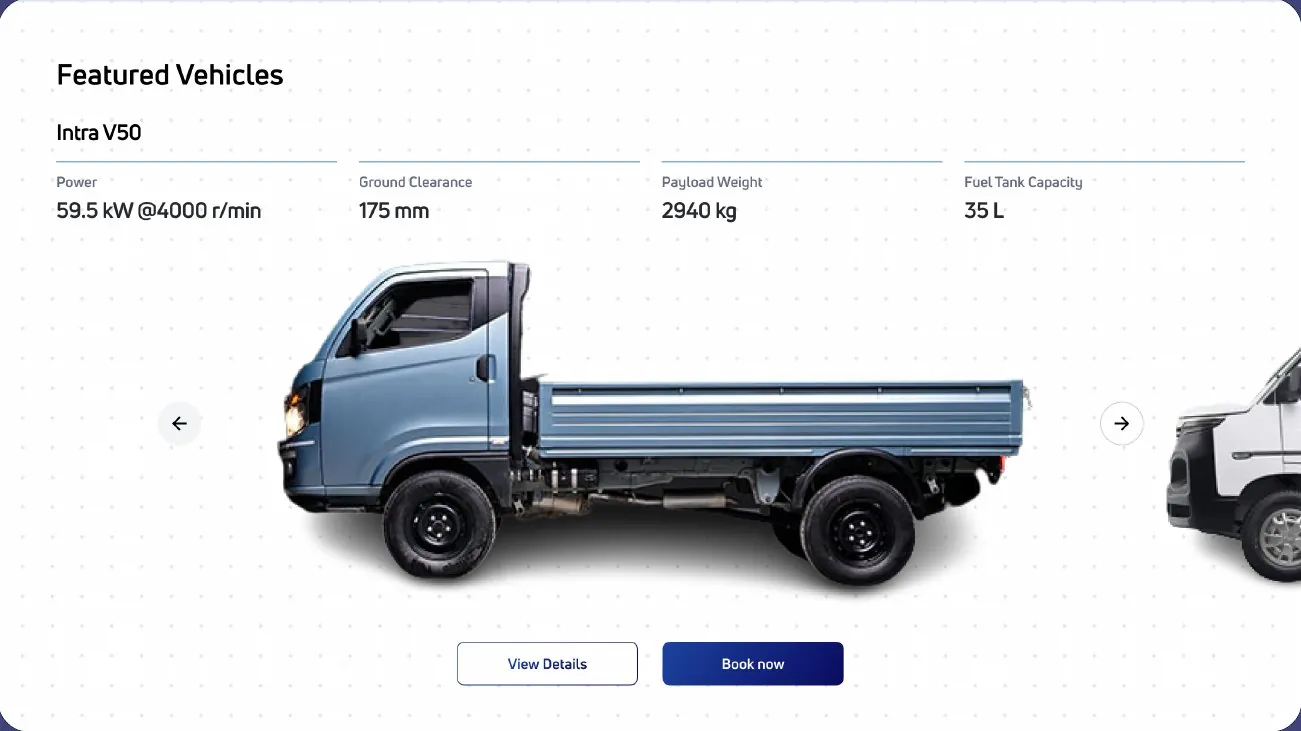
The website · 4 key screens
01 / 04
FleetVerse website: Home: search by product, segment or application
01Home: search by product, segment or application
FleetVerse website: Featured vehicles with the specs buyers compare
02Featured vehicles with the specs buyers compare
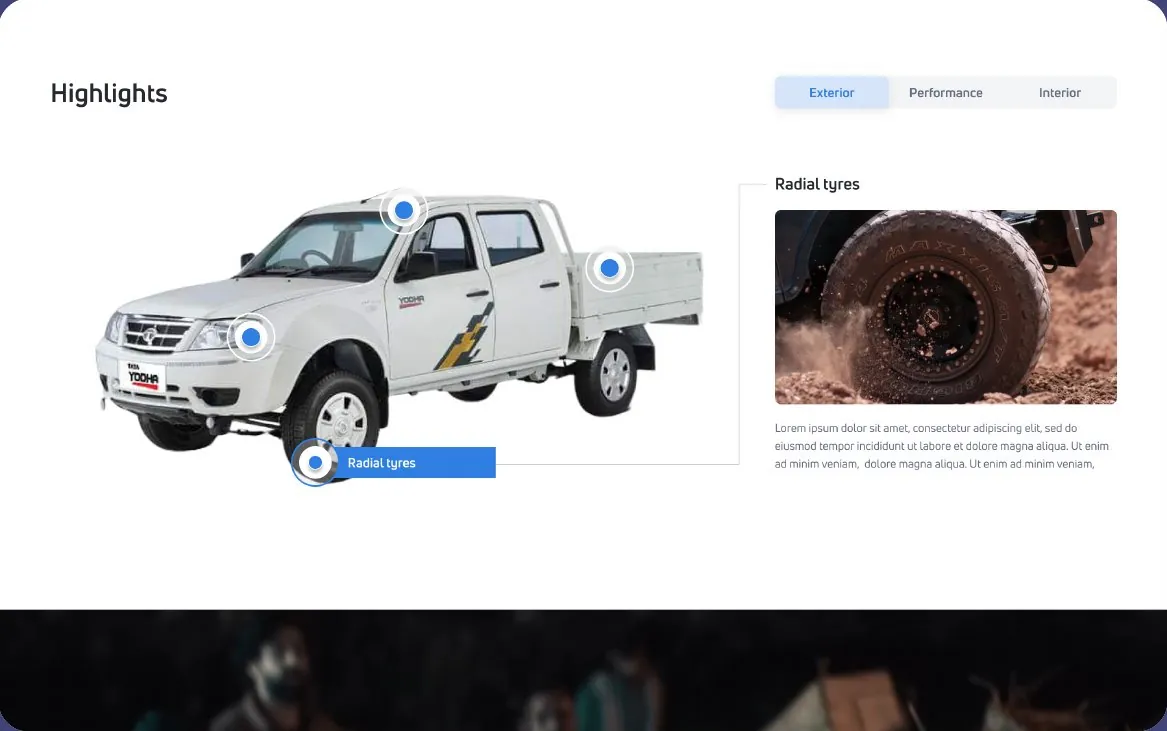
FleetVerse website: Highlights: explore the vehicle part by part
03Highlights: explore the vehicle part by part
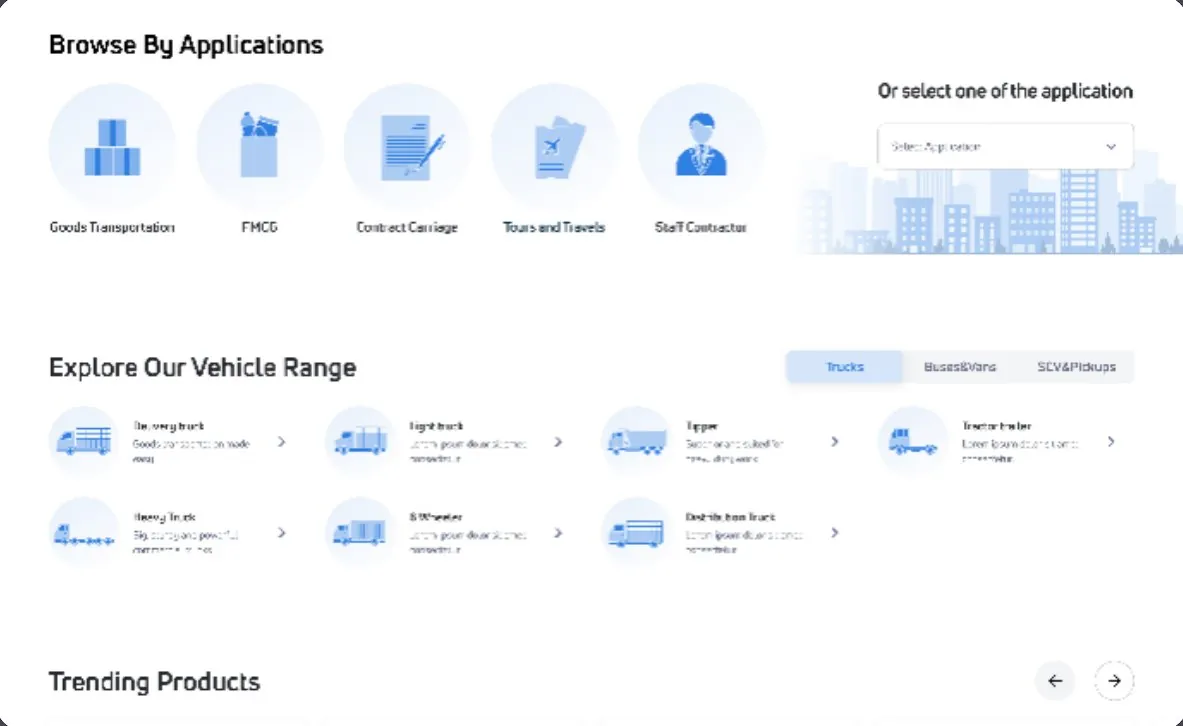
FleetVerse website: Browse by application, the way owners think about their work
04Browse by application, the way owners think about their work

What didn't work

FiltersVariants multiply fast and the product data was too inconsistent to filter reliably. That's partly why Smart Search narrows down by elimination.
A modern lookWe pitched a more contemporary direction, drawn from the brand and the client's other products. Leadership chose to stay close to the guidelines. For a first product, that was the right call.
Our research processWe didn't record the first interviews, and later recordings were lost to traffic noise. The report took far longer than it should have.
Build driftA variant picker didn't ship as designed, layouts broke as fields were added, and screens broke once the backend was connected.
05

Back to the field

Early 2024 · Sr UX Designer (from October 2023), back in the field for Round 2

Before designing an app, we wanted to see how the live website held up with real owners. Two teams covered all four zones of India: 104 owners, 56+ hours of interviews, 10,513 km. This time we debriefed every night and shortlisted insights while they were fresh.

Alongside the owners, we interviewed 20 of the client's staff, most of them sales executives. They showed us the other side of the purchase: how a buyer narrows down a vehicle, and how executives build relationships that bring repeat sales.

Owners rated the old platform 3.9 out of 5: easy to tap through, but frustrating in places. The most useful findings came from watching them use it.
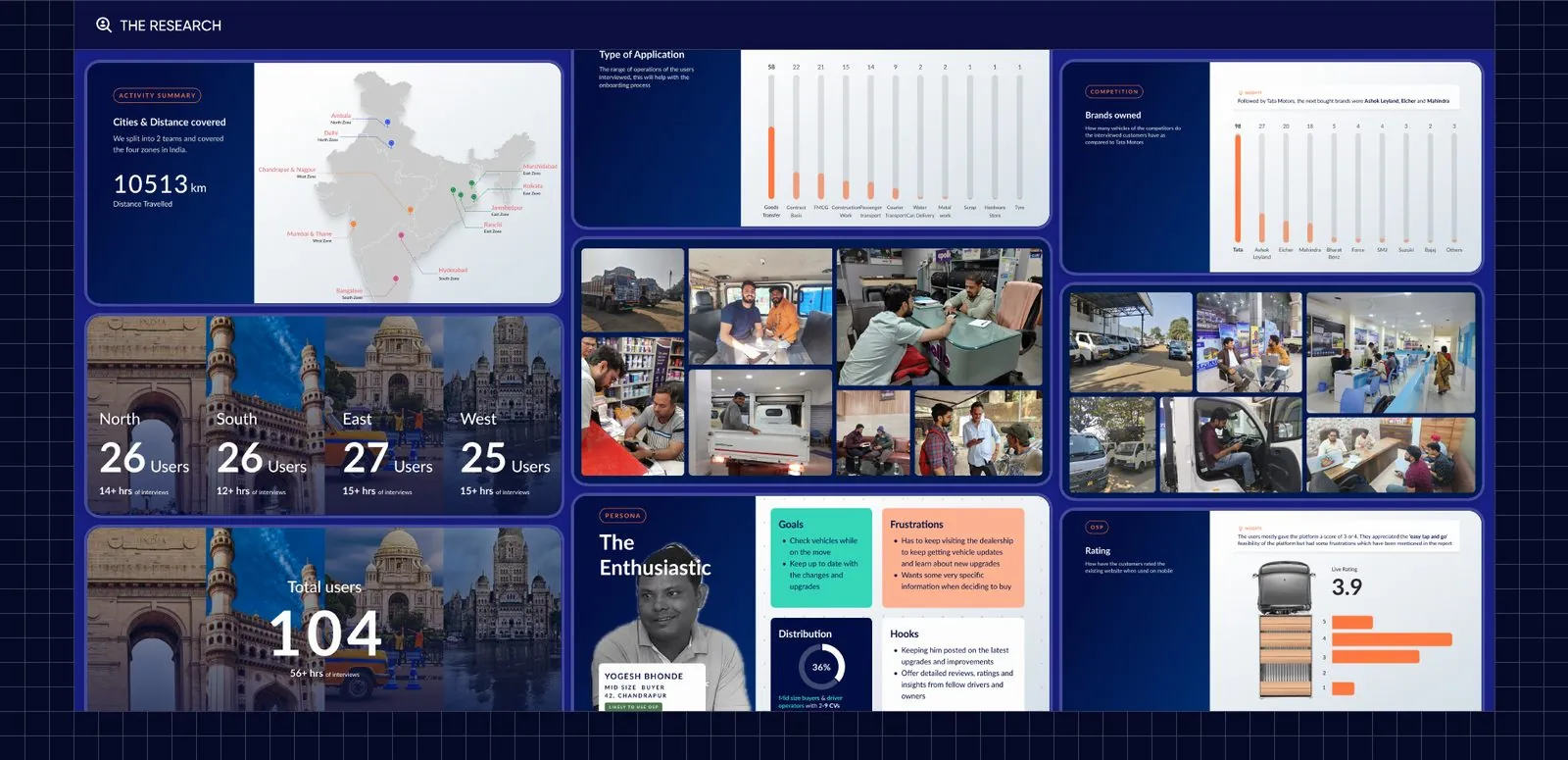
Round 2 research: 104 users across North, South, East and West India, 10,513 km travelled, field photos and findings
Round 2: 104 owners across four zones of India.

Decision 3Designing for the field

What we sawHow we knewWhat we changed
Our icons meant nothing to many usersObserved and reportedBorrowed the visual language of apps they use daily, like GoMechanic, PhonePe and Google Pay
Photos of a truck on a phone didn't build confidenceReportedA 3D view, including the cabin and sleeper space (live today)
Users missed tap targets; animations stalled on weak networksObserved. Nobody mentioned it.Icons and vectors instead of images and heavy animation, so pages were lighter and faster
"This isn't the truck I buy"ReportedThe idea of a business profile, which became the app's onboarding

The third row is the one I remember most. No owner complained about the configurator. They simply got stuck, and we only saw it because we were watching.

06

Chapter 2 · The app

2024–25 · Sr UX Designer & Project Lead

I led the design team and was the main point of contact with the client and the IT partner.

Buying the vehicle is the first step; maintaining it, financing it and staying up to date keep the owner coming back. Round 2 told us who would use it: people who reach for the mic and camera far more often than the keyboard.

Decision 4Built for the mic and camera

Nine languagesat launch: English, Hindi, Marathi, Tamil, Telugu, Malayalam, Odia, Bengali and Punjabi.
Voice search in every one of them.Owners send WhatsApp voice notes and speak their YouTube searches, so the search bar listens first.
Image searchfor the owner who has seen a vehicle on the road but doesn't know its name.
Literal iconsthat show what they mean, so nothing needs decoding.

Decision 5A profile, then a personal garage

Onboarding asks about the owner's business first. After that, a long-haul truck owner never sees mixers, and a delivery operator never sees heavy trucks. Owners can also add the vehicles they already own, which turns a buying app into one they keep using after the purchase.

As our second product, the app let us evolve the look: softer, rounder shapes than the website, still within the brand. We also refined the finance journey (EMI calculator, loan options, e-KYC, then a four-step booking) with the client's team, using their analytics.
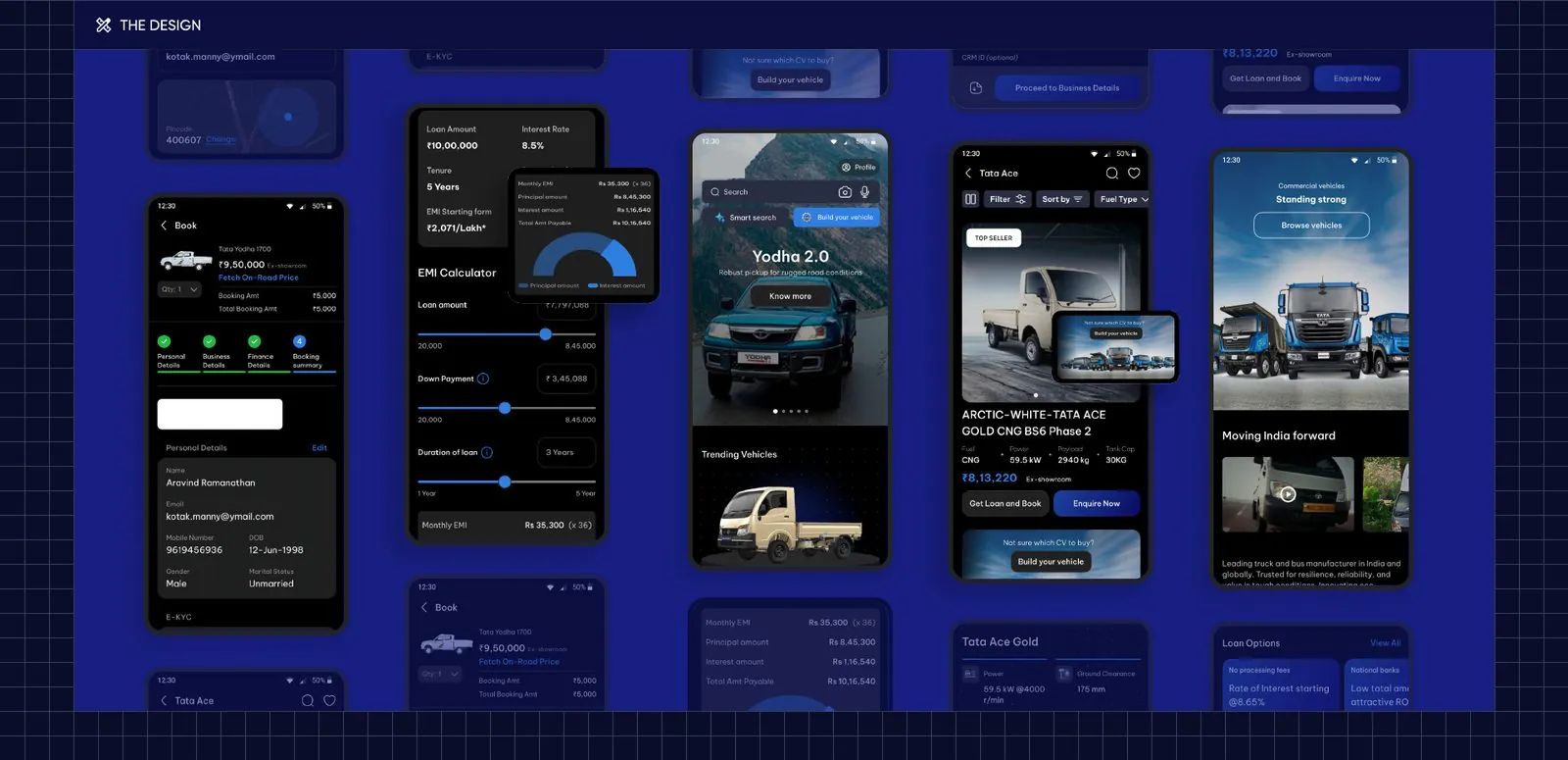
FleetVerse app screens: home, vehicle listing, vehicle details, EMI calculator and booking
The app: personalised home, listings, vehicle details, EMI calculator and booking.

Fixing how we shipped

For the app, we tested real builds connected to the live backend before every release, instead of reviewing screens in isolation. Problems that had reached users on the website were caught before launch.

07

Outcome

All four modules are live: the website with its 3D view, the configurator, Smart Search and the app.

1.2MPlatform usersClient, after the website went live (2023)
4.1MProduct viewsClient, after the website went live (2023)
75K+EnquiriesClient, after the website went live (2023)
+55%Engagement rateClient, vs the pre-launch period
+30%ConversionsClient, vs the pre-launch period
50K+App downloadsGoogle Play, Sep 2026
4.7App rating (169 reviews)Google Play, Sep 2026

These are platform numbers, and design is one of many things behind them, alongside the client's brand, marketing and dealer network.

The product found users we hadn't designed for. The client's sales executives began using FleetVerse with customers in the field, on phones, because carrying a laptop into a customer's shop isn't practical. That led to a dedicated dealer platform.

08

Epilogue · FleetVerse Dealer

2024–25 · Project lead

Once the app was out, the client told us it was good at taking bookings, but it didn't help the salesperson much. As project lead, I took on the next step: a platform for the salesperson.

Log in as the dealershipExecutives sign in as dealership staff, not customers, and manage their leads in one place.
Demo from the real productThe executive opens a vehicle in the app on a phone, or on the website on a tablet, with the same details and configurator customers see.
"Add as Interested"Replaces "Book Now" in the executive's view, so every demo becomes a lead.

This connected the client's lead system to the vehicle information in the FleetVerse app. FleetVerse Dealer is live and used by dealership staff.

The dealer view is internal to the client, so it isn't shown here. Walkthrough in interview

hiring a senior or lead designer?

Let's talk.